Why a Habit Starts Before You Decide
What a study of moviegoers and stale popcorn found about where habits start, and one change to try this week.

It's late, and you promised yourself this morning that tonight you'd go to bed instead of scrolling on the couch. Now you're on the couch with the phone already in your hand. You don't remember deciding to pick it up.
Most of us treat that moment as a failure of willpower: if you wanted it enough, you'd stop. The research on habits points earlier, to the setting you were in before any choice came up.
Psychologists David Neal and Wendy Wood, then at the University of Southern California, tested this with popcorn. In a study published in 2011, moviegoers on their way into a screening were handed either fresh popcorn or popcorn popped a week earlier. People who didn't usually eat popcorn at the movies ate much less of the stale batch. People who usually did ate about as much stale popcorn as fresh. In a meeting room, a place not usually tied to popcorn, taste mattered again, even to the regular popcorn eaters.
The dark theater was the cue. In the brain, routines like this run through part of the striatum, a region deep in the brain that links a familiar setting to the action that usually follows it. Once that link is strong, the setting starts the action before you have weighed whether you want it.
That makes the moment the cue kicks in a good place to interrupt a habit. In a second experiment, the same team had moviegoers eat with their other hand. Eating with the hand they didn't normally use seemed to break up the habit, and people ate much less of the stale popcorn than the fresh, even those with strong popcorn habits. This is one pair of experiments on one snack, eaten in one sitting, so I can't promise it will work on your own habits, but it's easy to try.
Here is one way to test it this week. Pick one habit you'd like to loosen and find the moment it starts, like sitting down on the couch at night and reaching for your phone, or hearing a notification and checking it right away. When that moment comes, change one physical detail of how you begin. Charge the phone in another room, or hold it in your other hand. The aim is to make the old sequence start a little wrong, so you notice it starting while you still have a say.
I wrote more about how habit loops form, and how to build better ones, in an article on breaking and building habits.
Not every cue is as easy to spot as a dark theater, and finding the ones that start your own habits is part of the work I do. That work begins with a consultation with me, by phone.
Dr. Sydney Ceruto
|
|
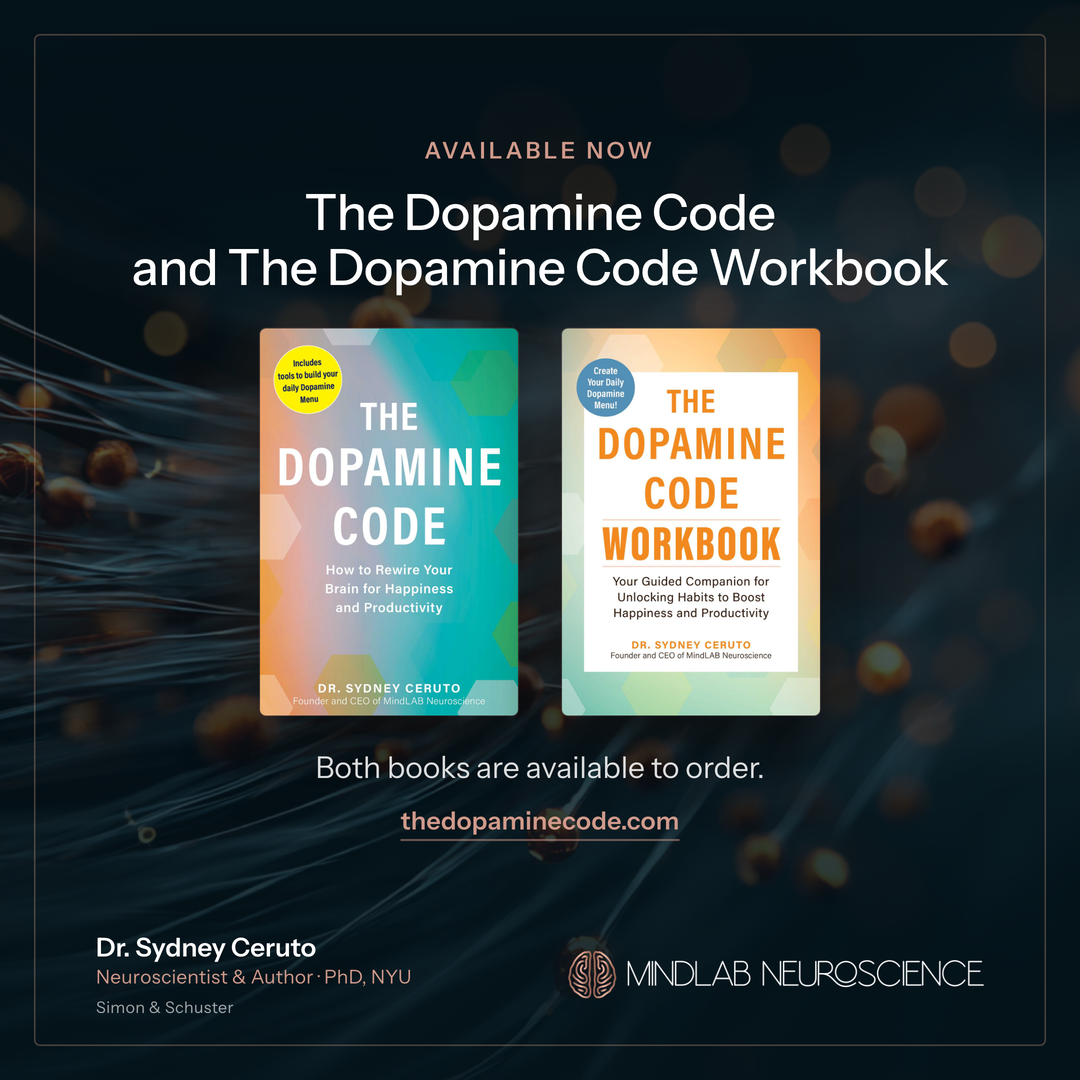
The Dopamine Code and The Dopamine Code Workbook
My June book, and the companion Workbook where you start with the rewards you already lean on and write the Dopamine Menu you would rather have.
Order now →
|